MINDOGRAPHY
MINDOGRAPHY
Client: Fujifilm
Project: Instax Launch
The Social Experiment Where AI, fMRI and Neuroscience Met Culture IN an Emotional Launch Event
Recognised globally for its innovation and creativity, with awards from Cannes Lions, D&AD, The One Show, Spikes Asia, ADFEST and the Mumbrella Awards, Mindography used neuroscience and AI to reconstruct and print human memories that had never been captured in photographs. Demonstrating vividly the powerful connection between printed photographs, memory and emotion.
It told the story of Nicole Toum, who lost her father in 2018, and with him, countless moments that existed only in memory. What followed was a world‑first experiment that blended science, emotion and technology to turn something intangible into something you could hold. Culminating in an emotional launch event for over 250 media, influencers, family and friends, who all joined Nicole to view the results of this remarkable and deeply personal social experiment.
The Challenge
In a world where over five billion photos are taken every day, only a fraction are ever printed.
Digital photography has made capturing moments effortless, but it has also made memories fragile. Images are lost through device failure, cloud errors and constant replacement. More importantly, many of the most meaningful moments are never photographed at all.
For Instax, the challenge was to prove the value of printed photography in a way that felt culturally relevant, emotionally resonant and fundamentally different from product‑led advertising.
This wasn’t about formats or features.
It was about reminding people why physical photos still matter.
The HERO Insight
Some memories are too important to leave to chance.
While digital images can disappear, memories leave lasting imprints in the human brain. If those memories could be accessed and visualised, printing could become more than preservation. It could become recovery.
The most powerful way to demonstrate the value of printed photographs was not to talk about technology, but to use technology to bring memory itself to life.
The Idea
Mindography used advanced neuroscience and AI to visualise memories that had never been photographed.
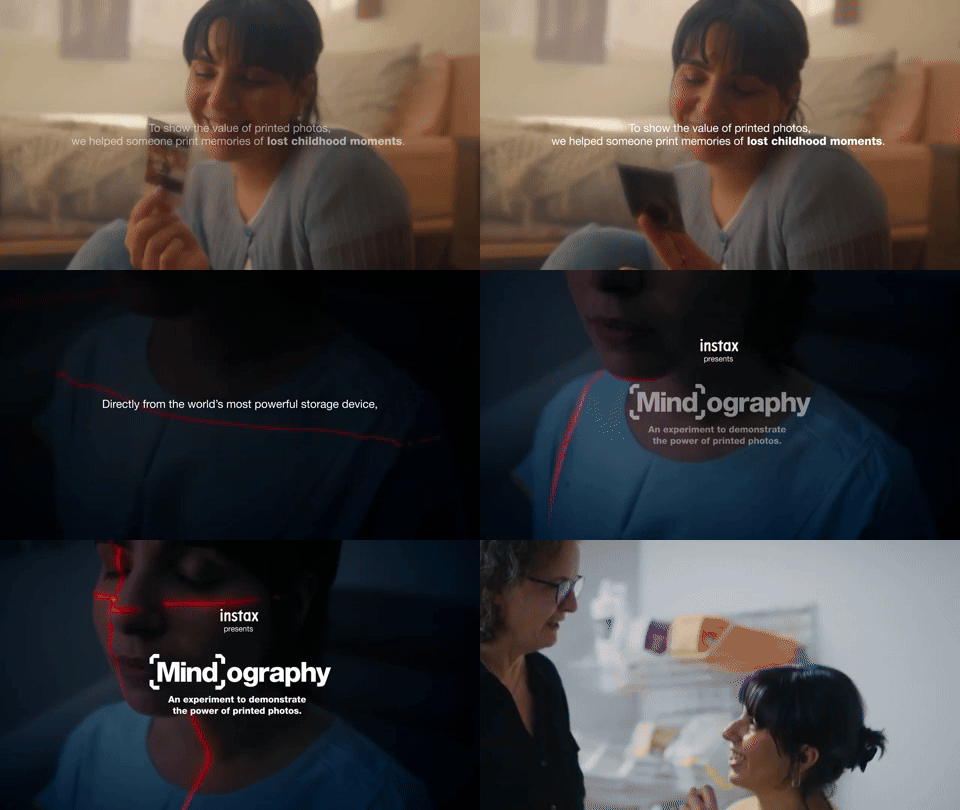
In collaboration with the Princeton Neuroscience Institute, researchers led by Dr. Paul Scotti used fMRI brain scans and machine learning to train an AI model on thousands of samples of Nicole’s neural activity as she viewed childhood photos and actively recalled memories of her late father.
The AI then generated visual representations of those memories, complete with personal distortion and emotional nuance. For the first time, images were reconstructed from memory alone and printed using the Instax Mini Link 3, transforming thoughts into tangible photographs.
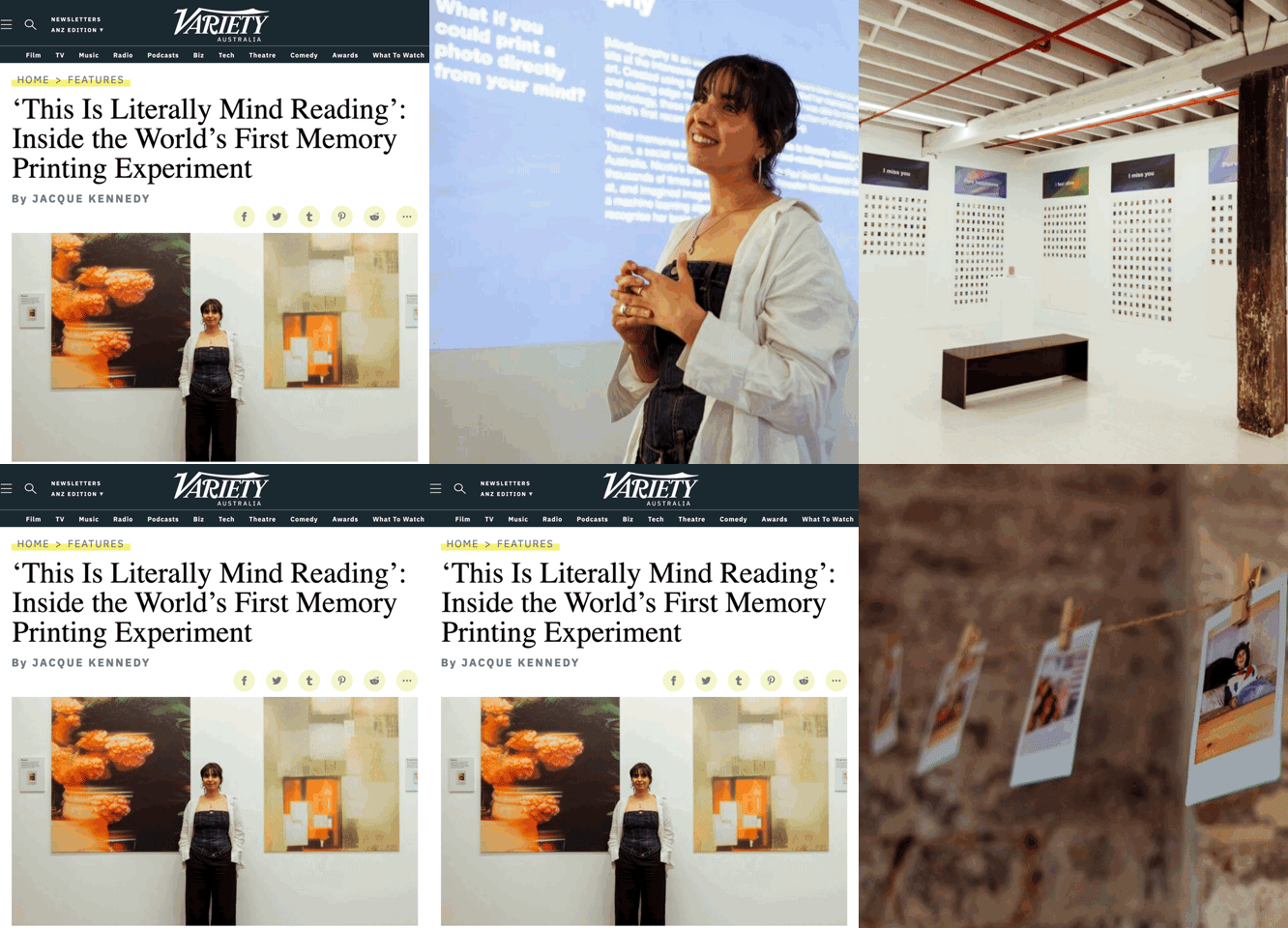
The experiment was documented in a film that balanced scientific credibility with genuine emotion, capturing both the technical process and Nicole’s reaction as her memories were realised in physical form at an emotional launch event in a vast Sydney gallery space.
The Platform
Mindography launched as a social‑first campaign supported by strategic PR, paid media and influencer marketing and events.
Social was not just the distribution channel, but the engine of participation, encouraging audiences to reflect on and share the memories they wished they’d captured. Short‑form content, behind‑the‑scenes science explainers and the hero film were designed to thrive in feeds while building trust in the technology.
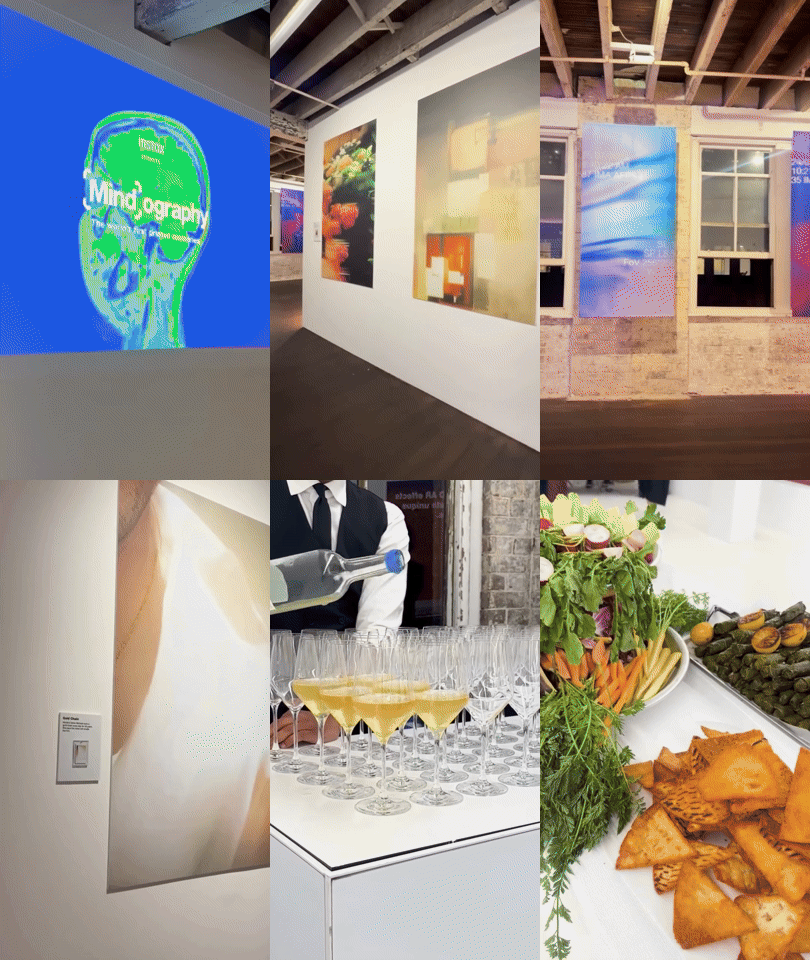
The work culminated in a public exhibition at China Heights Gallery in Sydney, where Nicole’s printed memories were unveiled as the centrepiece. The installation turned a deeply personal story into a shared cultural moment, blurring the line between art, science and content, and extending the idea beyond the screen.
The Impact
Mindography delivered significant cultural, engagement and commercial impact.
The campaign generated 20+ million impressions globally and drove an 800% increase in engagement, as audiences shared, discussed and reflected on the work. It also delivered a 102% increase in sales, signalling an active shift toward Instax over key competitors.
Beyond the numbers, Mindography reinforced Instax as a category leader in innovation, reignited emotional connection to printed photography, and set a new benchmark for how brands can use AI responsibly, emotionally and meaningfully.